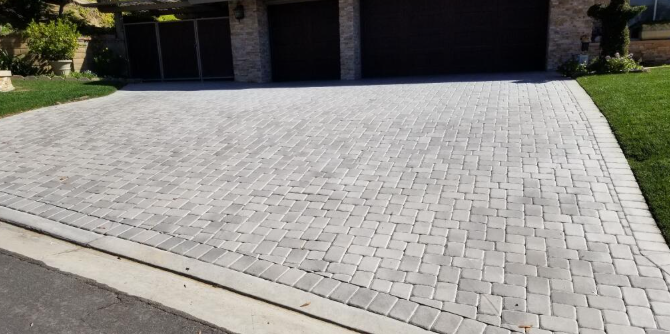
Looking for Affordable paving contractors in Corona, CA? Learn driveway costs, asphalt vs concrete options, and how to choose a licensed local pro.
Corona sits in western Riverside County where summer temperatures regularly push past 94 degrees and the sun beats down hard. That intense heat softens asphalt, fades concrete sealers, and cracks pavement that was not installed with the Inland Empire in mind. Add in the Santa Ana winds that whip dust and debris across exposed surfaces, and you have a climate that tests every driveway and parking lot in the area.
If your driveway is crumbling, your parking lot is developing potholes, or you are building new and need a finished surface, you need a paving contractor who understands Corona’s specific conditions. Not every crew that pours concrete or lays asphalt in Los Angeles knows how Inland Empire heat affects curing times and material selection.
Why Corona Homeowners Invest in Professional Paving
A well-paved surface does more than look good. It protects vehicles, reduces dust, improves drainage, and boosts property value. In Corona’s climate, the right pavement choice also needs to handle extreme temperature swings, from winter lows near 43 degrees to summer highs approaching 103.
According to local cost data, driveway paving in Corona averages $2,002 to $2,099 for asphalt and $4,534 to $4,743 for pavers. Concrete driveways in the area cost $3.94 to $7.88 per square foot. For a standard two-car driveway of 600 square feet, that puts asphalt at roughly $1,800 to $2,500 and concrete at $2,400 to $4,700.
The return goes beyond the initial install.
Properly sealed asphalt in Corona can last 15 to 20 years with regular maintenance. Concrete driveways often reach 30 years or more. Compare that to gravel, which needs regrading every couple of years, or bare dirt, which turns to mud in winter and dust in summer.Right paving contractors in Corona, CA
Paving Materials and Options for Corona’s Hot, Dry Climate
Not every paving material handles Inland Empire conditions the same way.Asphalt is the most common choice for residential driveways and commercial parking lots in Corona. It is flexible, handles thermal expansion well, and costs less than concrete upfront. The trade-off is maintenance. Asphalt needs sealcoating every two to three years to protect against UV damage and oxidation. In Corona’s intense sun, skipping sealcoating cuts lifespan in half.
Concrete costs more initially but needs less ongoing care.
It handles heavy loads better and does not soften in extreme heat. A licensed contractor in Corona told us that concrete is the better choice for RV pads, dumpster pads, and any surface that sees constant heavy traffic. The thermal mass of concrete also stays cooler underfoot than asphalt on a 100-degree day, which matters for pool decks and patios.
Concrete pavers offer the look of stone with the durability of concrete.
They are popular for front walkways and decorative driveway borders in neighborhoods like Horsethief Canyon Ranch and Sycamore Creek. If a paver cracks, you replace that single piece rather than repouring a whole slab.
Gravel works for long rural driveways or temporary construction access.
It is cheap to install but needs constant upkeep. In Corona’s dry climate, dust control becomes an issue. Many rural property owners upgrade to asphalt or chip seal after a few years of dealing with gravel dust.
The Paving Process Step by Step
A professional paving job starts long before the first truck arrives. Here is what happens when you hire a paving contractor in Corona.Best paving contractors in Corona, CA
Site Evaluation and Measurements.
The contractor visits your property, measures the area, and assesses soil conditions, drainage, and existing pavement condition. They check for underground utilities and note any trees, fences, or structures that affect access.
Design and Material Selection.
You choose between asphalt, concrete, or pavers based on your budget, traffic load, and aesthetic preferences. The contractor specifies thickness, base material, and reinforcement. For driveways, asphalt is typically laid 2 to 3 inches thick over 4 to 6 inches of compacted base. Concrete driveways run 4 to 6 inches thick with rebar or fiber reinforcement.
Permit Application.
Corona requires a construction permit for driveway paving that involves sub-grade preparation, paving, or curb and gutter work in any street, alley, or easement. The applicant must be a state-licensed contractor with the proper classification. The city’s Public Works Department reviews plans and issues permits. Sidewalks and driveways not more than 30 inches above adjacent grade may be exempt from building permits but still need Public Works approval if they connect to city streets.Professional paving contractors in Corona, CA
Demolition and Excavation.
The crew removes old pavement, hauls away debris, and excavates to the proper depth. They grade the subgrade to ensure water drains away from buildings and toward appropriate outlets.
Base Installation and Compaction.
A stable base is the foundation of long-lasting pavement. The crew lays crushed stone or recycled concrete aggregate and compacts it with a vibratory roller. Proper compaction prevents settling and cracking later.
Paving and Finishing.
For asphalt, the crew heats the mix to 300 degrees, spreads it with a paver machine, and compacts it while hot. For concrete, they pour, screed, float, and finish the surface with broom or stamp patterns. Control joints are cut or tooled to manage cracking.
Curing and Sealing.
Asphalt needs 24 to 72 hours to cool and harden before vehicle traffic. Concrete cures for 7 days before light use and 28 days for full strength. Sealcoating is applied after asphalt has cured for at least 6 months.
A standard residential driveway in Corona takes 2 to 4 days from start to finish. Larger commercial lots may take 1 to 2 weeks depending on size and complexity.
What Drives Paving Costs in the Corona Market
Paving costs in Corona vary widely based on material, size, and site conditions. Here is what moves your estimate up or down.
Surface Area.
Larger jobs have a lower cost per square foot because mobilization and equipment rental get spread over more area. A 200-square-foot walkway costs more per foot than a 10,000-square-foot parking lot.
Material Choice.
Asphalt at $3 per square foot versus concrete at $6 per square foot makes a significant difference on a 1,000-square-foot driveway. Pavers at $12 per square foot are the premium option.
Existing Pavement Removal.
Tearing out old asphalt or concrete and hauling it to a recycling facility adds $1 to $3 per square foot. Some contractors include this in their quote, others list it separately.
Site Access and Preparation.
Tight lots with limited equipment access, steep grades, or poor soil conditions add labor and material costs. Expansive clay soils common in parts of Riverside County may require geotextile fabric or deeper base preparation to prevent cracking.
Drainage Requirements.
Proper drainage is critical in Corona, where winter storms can dump significant rain in short periods. Installing catch basins, trench drains, or connecting to city storm systems adds cost but prevents water damage to your pavement and foundation.
Reinforcement and Upgrades.
Rebar, wire mesh, or fiber reinforcement adds $0.50 to $2 per square foot to concrete jobs. Colored or stamped concrete adds $2 to $5 per square foot. Heated driveway systems for frost protection are rarely needed in Corona but add $10 to $20 per square foot where requested.
How to Choose the Right Paving Contractor in Corona
Paving is a significant investment, and the quality of installation determines whether your surface lasts 20 years or needs repairs in 5. Here is what to look for.
California CSLB License.
California requires any paving contractor bidding $500 or more to hold a C-12 Earthwork and Paving Contractor license from the Contractors State License Board. Verify the license number online. An unlicensed operator may offer a lower bid, but you have no recourse if the work fails.
Insurance and Bonding.
Licensed contractors must carry a $25,000 surety bond and workers’ compensation insurance if they have employees. Ask for certificates before work begins.
Local Experience.
A contractor who has paved driveways in Corona knows how Inland Empire heat affects asphalt curing, which base materials work best in local soils, and how to navigate the city’s Public Works permitting process. Ask for photos of completed jobs in neighborhoods like Sierra Del Oro, Dos Lagos, or Corona Hills.
Written Contract and Warranty.
The contract should specify materials, thickness, base preparation, timeline, and payment schedule. California law limits deposits. A warranty against defects in materials and workmanship should cover at least 1 to 2 years.
A contractor who works exclusively on paving in Corona will have handled the local permit process, know which materials hold up in extreme heat, and carry the trade-specific insurance that general contractors often skip. Companies like Superior Asphalt Services fit this profile for property owners who want a specialist rather than a generalist.
Ask for three local references and call them.
Ask about how the pavement looks today, whether cracks developed, and if the crew finished on schedule. The answers will tell you more than any website gallery.
Frequently Asked Questions
How much does driveway paving cost in Corona, CA?
Asphalt driveway paving in Corona averages $2,002 to $2,099. Concrete driveways cost $4 to $8 per square foot. A standard 600-square-foot two-car driveway costs $1,800 to $2,500 for asphalt or $2,400 to $4,700 for concrete.
Do I need a permit to pave my driveway in Corona?
Yes, if the work involves sub-grade preparation, paving, or curb and gutter construction in a street, alley, or easement. The applicant must be a state-licensed contractor. Sidewalks and driveways not more than 30 inches above grade may be exempt from building permits.
What is the best paving material for Corona’s climate?
Asphalt works well for most driveways and parking lots but needs sealcoating every 2 to 3 years. Concrete handles heavy loads better and stays cooler in summer heat. It is ideal for RV pads and high-traffic areas. Both materials perform well when properly installed.
How long does a paved driveway last in Corona?
Properly installed and maintained asphalt lasts 15 to 20 years. Concrete driveways often reach 30 years or more. Regular sealcoating every 2 to 3 years doubles or triples asphalt lifespan by protecting against UV damage and oxidation.
How do I verify a paving contractor’s license in California?
Visit the California Contractors State License Board website and enter the contractor’s license number. Look for an active C-12 Earthwork and Paving classification. The license should be current and in good standing.
How long does the paving process take?
A standard residential driveway takes 2 to 4 days. Commercial parking lots may take 1 to 2 weeks. Asphalt needs 24 to 72 hours before vehicle traffic. Concrete cures for 7 days before light use and 28 days for full strength.
Should I choose asphalt or concrete for my Corona driveway?
Asphalt costs less upfront and handles thermal expansion well. Concrete lasts longer and needs less maintenance. Choose asphalt for budget-conscious projects and large parking areas. Choose concrete for heavy loads, decorative finishes, or pool decks where surface temperature matters.
What causes asphalt to crack or develop potholes?
Cracking results from UV oxidation, water infiltration through unsealed surfaces, and thermal expansion. Potholes form when water seeps beneath the pavement, weakens the base, and traffic breaks the surface. Proper sealcoating and drainage prevent both issues.
How does Corona’s heat affect asphalt paving?
Summer temperatures above 94 degrees soften fresh asphalt and accelerate curing. Contractors in Corona schedule pours in early morning to avoid midday heat. UV exposure breaks down asphalt binders over time, making sealcoating essential for longevity.
What payment terms are normal for a paving contractor in California?
Milestone payments are standard: a deposit for materials, then progress payments at base completion and final walkthrough. California law limits deposits for licensed contractors. Never pay the full balance before the job is complete and inspected.
Can I pave over my existing driveway?
In some cases, yes. Asphalt can be resurfaced with a new layer if the base is stable and cracks are minimal. Concrete generally cannot be paved over and requires removal. A contractor will assess your existing surface and recommend the best approach.
What is sealcoating and do I need it?
Sealcoating is a protective layer applied to asphalt to block UV rays, seal small cracks, and prevent water penetration. In Corona’s intense sun, sealcoating every 2 to 3 years is essential for maximizing pavement life. It costs $0.25 to $0.50 per square foot.
Conclusion
You have measured your driveway, noticed the cracks, and set a rough budget. The next move is finding a contractor who can assess your base conditions, recommend the right material for Corona’s heat, and complete the work to city code. Start with a detailed written estimate that breaks out demolition, base preparation, materials, and finishing. Ask about their experience with local permitting and whether they warranty against defects.Top paving contractors in Corona, CA
If you want a local team that knows Corona’s climate and paving requirements, Superior Asphalt Services offers project assessments and can walk you through your material and design options without pressure. Reach out to Superior Asphalt Services to discuss your paving plans and get a realistic quote for your Corona property.