Hiring paving contractors in Corona? See the full step-by-step process from first call to final inspection with Superior Asphalt Services.
Most folks have no idea what actually happens when a paving crew shows up at their property. A few trucks roll in, some workers do stuff for a couple of days, and suddenly there’s a smooth black surface where there used to be a beat-up driveway or cracked parking lot.
But behind that simple-looking result is a real step-by-step process that separates good jobs from bad ones. Understanding what should happen helps you spot when a contractor is cutting corners. And cut corners in paving show up fast as cracks, sinking spots, and broken edges within months.
We at Superior Asphalt Services put this together to walk you through exactly what a real paving project looks like from start to finish. No marketing fluff. Just the actual work.
Step One: The First Phone Call
Everything starts with a call or online form. The first conversation should take 10 to 15 minutes and cover the basics:
- What you need paved (driveway, parking lot, walkway)
- Rough size of the area
- Current condition (new pour, resurface, full replacement)
- Your timeline
- Budget range
A good paving contractor asks real questions during this call instead of pushing for an in-person visit right away. We want to make sure we’re a good fit for your project before we schedule a site visit.
If everything sounds like a match, we set up a time to come look at your property.
Step Two: The Site Visit
A team member shows up at your property to look at the area in person. This visit usually takes 30 minutes to an hour.
What happens during a real site visit:
- Walking the area to check current condition
- Taking measurements with a wheel or laser tool
- Checking slope and drainage patterns
- Looking for buried utility markers
- Noting access points for trucks and equipment
- Asking how you use the space (residential, commercial, trucks vs cars)
Anyone quoting paving over the phone without seeing the site is a bad sign. Real pros need to see what they’re working with.
Step Three: The Written Quote
Within a few days after the site visit, you should get a clear written quote.
What a quality quote includes:
- Exact square footage being paved
- Asphalt thickness (in inches)
- Base material specs and depth
- Drainage plan if needed
- Equipment that will be used
- Timeline with start and end dates
- Total price with payment schedule
- Warranty terms in writing
A 2024 industry report from the Asphalt Institute found that quotes with detailed scope of work had 64% fewer dispute claims than vague quotes. The detail matters.
Step Four: Permits and Utility Marking
Some paving jobs need permits. Most residential driveways don’t if they’re replacing existing surfaces. Commercial parking lots usually do, especially in Corona.
Before any work starts:
- City permits get pulled if required
- 811 utility marking (free service to mark underground lines)
- HOA approvals if applicable
- Property line confirmation
We handle all this paperwork for our clients. The utility marking is especially important because nobody wants a paving crew hitting a gas or water line during excavation.
A Real Story From a Corona Project
Last year, a business owner in Corona called us about resurfacing their 14,000 square foot parking lot. They’d gotten three quotes ranging from $32,000 to $58,000.
We did our site visit and noticed two things the cheaper quotes had missed. The existing asphalt had alligator cracking in three areas that would telegraph through any new surface. And the drainage near the loading dock was already failing, with standing water staining the asphalt.
Our quote came in at $48,000 but included cutting out and replacing the failed sections before the resurface, plus regrading the drainage area. The cheapest quote would have laid new asphalt over the problems, and they’d have come back within a year.
The owner picked us. The job took 5 days. Two years later, the lot still looks clean and drains right. He told me the extra cost saved him from a full redo just a year later.
Step Five: Site Preparation
This is where the actual work begins. Site prep usually takes 1 to 2 days depending on project size.
What happens:
- Removing all furniture, vehicles, and obstacles from the area
- Cutting and removing existing asphalt if doing full replacement
- Excavating to the correct base depth
- Removing topsoil, roots, and weak material
- Setting up traffic control for commercial sites
- Protecting nearby plants and structures
This prep stage is what separates pros from amateurs. Skipping it shows up as failures within months.
Step Six: Base Installation
The base under your asphalt is what holds everything up. A failing base means a failing surface.
A real base install includes:
- Spreading aggregate base material (crushed stone)
- Grading for proper slope and drainage
- Compacting in layers with heavy equipment
- Adding more material and compacting again
- Final grading check
The base depth depends on the project. Driveways need 4-6 inches. Light commercial sites need 6-8 inches. Heavy truck areas need 10-12 inches.
If you’re looking at Professional Paving Contractors in Corona, ask specifically about base depth and compaction. Real pros can explain exactly what they’re doing.
Typical Paving Project Timeline
Here’s a chart of standard timelines we share with clients:
| Project Type | Days for Prep | Days for Paving | Days to Use |
| Residential Driveway | 1 day | 1 day | 2-3 days |
| Small Commercial Lot | 1-2 days | 1-2 days | 3-5 days |
| Medium Commercial Lot | 2-3 days | 2-3 days | 5-7 days |
| Large Commercial Lot | 3-5 days | 3-5 days | 7-10 days |
| Resurfacing Only | 1 day | 1-2 days | 2-3 days |
Weather can shift these timelines a day or two either way.
Step Seven: Asphalt Installation
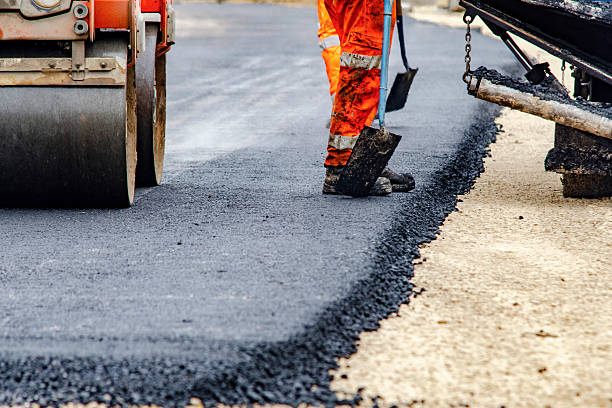
This is the part everyone associates with paving. Hot mix asphalt arrives by truck from a local plant and gets spread by a paver machine.
What happens during the pour:
- Asphalt arrives at 275-325 degrees Fahrenheit
- Paver machine spreads it at the right thickness
- Workers shovel and smooth edges by hand
- Rollers compact the surface in multiple passes
- Edges get tamped down for clean transitions
The whole pour usually takes 4 to 8 hours for a typical driveway. Bigger jobs run a full day or more.
A 2023 study from the National Asphalt Pavement Association showed that proper compaction during install added an average of 8 years to asphalt lifespan compared to under-compacted jobs. The roller work matters way more than people think.
Step Eight: Cooling and Curing
After installation, your new asphalt needs time to cool and harden.
Quick reference:
- Foot traffic okay after 4-6 hours
- Cars after 24-72 hours depending on weather
- Heavy vehicles or trucks after 5-7 days
- Full hardness reached around 30 days
In Corona’s hot summers, asphalt can stay soft longer because of the heat. Cooler months mean faster cure times. We give specific guidance based on weather conditions for your job.
Step Nine: Final Touches
Once the asphalt is cool enough to walk on, finishing work happens:
- Striping for parking lots (lines for spaces, arrows, fire lanes)
- Sealing edges where asphalt meets concrete or grass
- Installing wheel stops or bollards if needed
- Cleaning up any excess material
- Removing equipment and tools
A clean finish makes the whole job look professional. Sloppy edges and unclear striping ruin otherwise good work.
Step Ten: Walk-Through and Warranty
Before final payment, we walk through the whole job with you. We check:
- Surface smoothness and consistency
- Edge cleanness
- Drainage flow (sometimes with a water test)
- Any visible defects or missed spots
- Striping placement and visibility
You get a copy of the warranty paperwork, care instructions, and a maintenance schedule. Most quality paving warranties cover:
- 1 to 2 years on workmanship
- 5 to 7 years on materials
- Free fix-ups for settling or cracks in the first year
Step Eleven: After the Job
Real paving contractors don’t disappear after the check clears. We check in 6 months later to make sure everything’s holding up. Small issues like minor settling near edges can be addressed under warranty.
A 2024 customer satisfaction survey from the Better Business Bureau found that paving contractors who followed up after jobs had 78% higher repeat customer rates than those who didn’t. Good follow-up is part of being a real pro.
Conclusion
A paving project has a lot of steps, but each one matters for the final result. From the first phone call through the warranty walk-through, every part of the process shapes how long your asphalt will last. When you know what to expect, you can spot the difference between real pros and quick-buck contractors. We’ve been helping Corona homeowners and businesses get paving done right for years. If you want a team that handles Trusted Parking Lot Paving Near Me in Corona with honest pricing and quality work, give us a call.
FAQs
How long does asphalt paving take in Corona? Most residential driveways wrap in 1 to 3 days from start to finish. Small commercial parking lots take 3 to 5 days. Larger projects can stretch to 7 to 10 days depending on size and prep work needed. We give you a clear timeline before any work starts.
Do I need to be home during the paving work? For residential driveways, it helps to be available for the start and end of the job. The rest of the work can happen while you’re at work or out. For commercial lots, we usually coordinate with the property manager or owner for access and questions.
Can paving be done in rain or hot weather? Asphalt can’t be installed in active rain because water ruins the bond between layers. Heavy heat over 100 degrees can also affect the install. We watch the forecast and schedule around weather conditions. Most Corona days are fine for paving except during winter storms or summer heat waves.
How much disruption should I expect during paving? You’ll need to keep cars off the area for several days. The crew works during normal business hours with some noise from equipment. Commercial sites usually have part of the lot closed while we work on different sections. Most clients handle the disruption fine with a few days of planning.
Do you offer payment plans for paving projects? Yes, we work with financing partners for larger commercial paving projects. Residential driveways usually don’t need financing because the cost is lower. For commercial jobs over $30,000, we can talk through payment plan options during our first meeting. Standard residential work uses a deposit plus final payment structure.