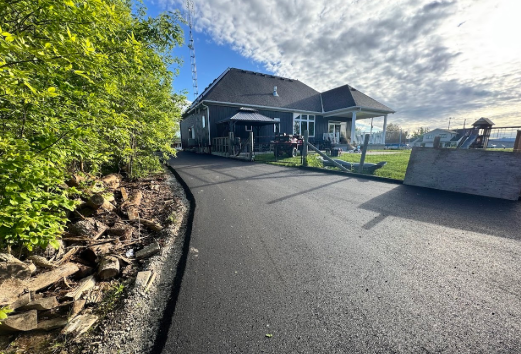
Find a trusted residential paving company in Ontario. Superior Asphalt offers expert driveway paving, asphalt repair, and sealcoating services. Call today for lasting results.
The driveway that welcomed you home five years ago is now a patchwork of cracks, potholes, and faded gray asphalt that looks older than the house itself. Every rainstorm sends water pooling into the low spots, seeping beneath the surface and widening the damage you told yourself you’d fix last spring. In Ontario, where winter temperatures plunge below -20°C, freeze-thaw cycles attack pavement from October through April, and summer heat softens surfaces already weakened by salt and plowing, a deteriorating driveway isn’t just an eyesore. It’s a liability that damages vehicles, creates tripping hazards, and drags down your property’s curb appeal. Finding a reliable residential paving company in Ontario means more than hiring someone with a paver and a roller. It means finding a crew that understands Canadian climate engineering, Ontario’s aggregate quality standards, and how to build pavement that survives everything the Great Lakes throw at it.
What Paving Actually Involves in Ontario
Paving in this region follows rules that would surprise a contractor from the southern United States or Mediterranean climate. Ontario sits in the humid continental zone, where winter temperatures routinely hit -25°C, frost penetrates 1.2 to 1.5 meters into the ground, and spring thaw creates saturated subgrade conditions that destroy improperly built pavement. The province receives 80 to 100 freeze-thaw cycles annually, each one expanding cracks, pumping fines to the surface, and accelerating deterioration at rates that mild-climate contractors simply cannot comprehend. paving company in Ontario
In Ontario, we’ve noticed that most homeowners focus on the surface appearance, the smooth black finish, the clean edges, while the structural foundation that makes or breaks pavement longevity gets treated as an afterthought. The reality is that Ontario’s residential properties span from century-old farmhouses on clay-heavy rural lots to 1980s subdivisions with marginal base preparation and newer developments near the Golden Horseshoe. Each site presents different engineering challenges. Older properties often have inadequate drainage, organic subgrade material, and driveways built before modern compaction standards existed. Newer homes may have been paved during construction booms when speed compromised base thickness. Our assessment process starts with understanding what your soil actually is, not what a standard paving chart says it should be.
The regulatory environment matters enormously here. Ontario’s Building Code, municipal bylaws, and Ministry of Transportation standards govern everything from asphalt mix design to drainage slopes and right-of-way encroachments. Residential paving that alters drainage patterns, exceeds property line setbacks, or uses non-compliant materials requires proper permits and inspections. Skip this step and you’re not just risking fines, you’re creating liability issues that surface when ice forms on neighbouring properties or your driveway fails within a season. We handle compliance verification as standard practice, not an upsell. paving Residential company in Ontario
The Real Challenge in Ontario
What locals actually face isn’t a shortage of pavers willing to work, it’s a shortage of pavers who won’t treat their driveway like a generic parking lot. Ontario’s position as Canada’s most populous province, combined with its mix of urban density, suburban sprawl, and rural acreage, creates a unique set of paving demands that standard approaches miss entirely.Residential paving company in Ontario
A client in rural Ontario reached out after their driveway paving project started showing problems within one winter. A previous contractor had laid 2 inches of asphalt over topsoil without proper excavation, skipped geotextile fabric over the clay subgrade, and provided no edge restraint or drainage channeling. Within eight months, the surface developed alligator cracking, potholes opened after the first spring thaw, and the homeowner faced a $14,000 complete removal and rebuild on top of the original paving cost. We brought in a geotechnical assessment, excavated to proper depth, installed a crushed stone base with optimal moisture content, used polymer-modified asphalt designed for Ontario’s temperature extremes, and built drainage that moves water away from the pavement structure. The difference between a paver who understands frost heave mechanics and one who guesses was about $800 in proper base materials, and a driveway that didn’t self-destruct.
Here’s the objection most competitors avoid answering: “Why is your quote higher than the guy who said he could do it for half?” The answer usually comes down to what’s actually included. Too many Ontario paving contractors quote low to win the job, then discover “unforeseen issues” that drive the price up mid-project. Or worse, they simply skip critical steps, proper excavation depth, adequate base thickness, compaction testing, and edge drainage, and leave you with pavement that looks fine on day one but creates expensive failures within a single winter. An honest quote accounts for the real work required, not the minimum work that gets a signature.
How Superior Asphalt Approaches It Differently
Search for paving advice and you’ll find the same generic tips everywhere: “get three quotes,” “check references,” “hire a licensed contractor.” What virtually no source addresses is how Ontario’s specific conditions, its frost penetration, its aggregate freeze-thaw susceptibility, its spring thaw weakening, create challenges that standard approaches miss entirely.
Ontario’s climate here isn’t just cold. It’s actively working against your pavement. Winter frost heave lifts and cracks improperly supported surfaces. Spring thaw saturates subgrade and pumps fines upward. Summer heat softens oxidized asphalt. Fall freeze events catch moisture in unsealed cracks and blow them open. Superior Asphalt handles these regional realities as standard practice, not an upsell.
Our paving specification process goes deeper than ordering a truck of hot mix. Ontario’s conditions create specific demands: minimum 6-inch compacted granular base over clay subgrades, 2.5 to 3 inches of HL3 or Superpave-designed asphalt with proper air void content, and longitudinal joint construction that prevents water infiltration at the weakest point. We specify materials and techniques rated for Ontario’s climate zone, not generic approaches that work in Georgia but fail here.
The competitor gap insight that generic articles never mention: driveway paving and asphalt repair for Ontario’s seasonal properties. Many homes in this area serve as cottages, rural retreats, or seasonal residences where pavement sits unused for months then faces intense loading during short seasons. A standard residential approach ignores these specific demands. Cottage driveways require enhanced drainage because vegetation grows unchecked during absence. Seasonal properties need asphalt repair strategies that address oxidation from UV exposure without traffic wear to rejuvenate the binder. Rural acreage demands different load calculations for farm equipment and recreational vehicles. We design our services with these realities in mind, delivering results that meet recreational property needs, agricultural access requirements, and the exacting standards of Ontario’s discerning homeowners.
Practical Tips: What to Know Before You Decide
Before hiring any residential paving company, ask how they handle subgrade preparation. Anyone who says “we’ll just lay it on what’s there” or “the existing base is fine” is either uninformed or cutting corners. Ontario’s frost penetration requires proper excavation, removal of organic material, and installation of free-draining granular base to prevent spring thaw weakening. Skipping these steps creates failures that cost far more than the paving itself. Alligator cracking appears within months, potholes form after the first winter, and your investment becomes a liability.
Working with clients in Ontario, our team found that properties near the Great Lakes consistently have elevated water tables and clay-heavy soils that standard pavers ignore. Rural driveways on agricultural land often have topsoil and organic layers that must be completely removed. We include geotechnical assessments in every major paving evaluation and recommend appropriate base solutions where needed, not as upsells, but as necessities for lasting performance. A driveway paved over inadequate base in a Canadian winter is a pothole waiting to happen, not an improvement.
One local market-specific tip: Ontario municipalities maintain specific zoning and right-of-way bylaws that affect driveway dimensions, curb cuts, and drainage discharge. Frontage modifications, width expansions, and culvert installations can require municipal approval. Check with your local building department before finalizing plans. We’ve seen homeowners invest in driveway paving that violated setback requirements or altered drainage onto neighbouring properties, forcing costly removal after installation. We verify compliance during our initial assessment, not after you’ve committed to a design that can’t be approved.
Also, verify their sealcoating services plan. Fresh asphalt requires 6 to 12 months of curing before sealcoating application, but ongoing maintenance every 2 to 3 years dramatically extends pavement life. We provide maintenance schedules and protective treatments that guard against oxidation, UV damage, and water infiltration, protecting your investment long after the initial paving is complete.
Why Ontario Homeowners Choose Superior Asphalt
Paving in this environment isn’t a cosmetic upgrade, it’s functional infrastructure improvement that affects your daily access, your vehicle maintenance costs, and your property’s value. The combination of Ontario’s extreme freeze-thaw cycles, clay-heavy subgrade conditions, varied residential properties spanning urban to rural settings, and municipal compliance requirements creates demands that cookie-cutter approaches simply cannot meet.
When you choose Superior Asphalt for your Ontario property, you get a team that factors in geotechnical realities, drainage engineering, climate-appropriate mix design, compaction standards, and future maintenance planning. We don’t just lay asphalt. We build driveways that survive Canadian winters and look professional for decades.
Ready for a residential paving company in Ontario that actually delivers what they promise? Contact Superior Asphalt today for a thorough assessment, honest scope, and a plan built around how your property actually performs.
Conclusion
Every spring you spend navigating around new potholes, scraping your vehicle’s undercarriage on frost-heaved edges, or wincing at the faded, cracked surface greeting visitors is a spring you’re accepting less than your property deserves. Ontario’s brutal winters don’t forgive paving shortcuts. The freeze-thaw cycles, the road salt, the heavy snow loads, the spring thaw saturation, they find every weakness in substandard work and exploit it relentlessly. A driveway that fails after one winter isn’t just a bad investment. It’s a warning that the contractor didn’t understand what Canadian pavement actually faces.
Superior Asphalt has built its reputation on understanding that a residential paving company in Ontario isn’t about making driveways look good for a season. It’s about building surfaces that withstand everything from January ice storms to August heat waves, that protect your vehicles from damage, and that maintain your home’s curb appeal year after year. Our driveway paving starts with engineering that respects your soil conditions and drainage realities.
FAQs
How long does a typical driveway paving project take in Ontario?
Most residential driveway paving projects take 2 to 5 days depending on size, site preparation requirements, and weather conditions. Asphalt repair and sealcoating services typically complete in 1 to 2 days. We build realistic timelines that account for proper curing and compaction requirements rather than promising impossible speeds.
Do I really need full excavation, or can you just pave over my existing driveway?
Ontario’s freeze-thaw cycles demand proper structural support that overlaying rarely provides. Paving over failed asphalt traps existing problems and guarantees early failure. We assess each site individually, but typically recommend proper excavation and base installation for lasting results. An honest evaluation saves money long-term compared to repeated repairs.
How do I know if a paving contractor is actually qualified and not just cheap?
Verify Ontario business registration, request proof of liability and workers’ compensation insurance, and ask for local references from recent projects completed through at least one full winter cycle. Qualified contractors welcome this scrutiny and maintain these credentials without hesitation. Also ask about their specific experience with Ontario’s climate challenges.
What should I budget for a residential paving company in Ontario?
Most driveway paving projects in Ontario range from $4,500 to $12,000 depending on size, site conditions, and base requirements. Asphalt repair typically ranges from $800 to $3,500. Sealcoating services average $500 to $1,500 depending on driveway dimensions. We provide detailed, line-item estimates so you understand exactly what each phase costs.
How soon after paving can I use my driveway, and when should I sealcoat?
Fresh asphalt requires 24 to 72 hours of curing before vehicle traffic depending on temperature and thickness. Initial sealcoating should wait 6 to 12 months to allow full oxidation and hardening. After that, sealcoating services every 2 to 3 years protects against UV damage, water infiltration, and oxidation, extending pavement life by decades.